Case study · Influencer collaboration ecosystem
Fefacollab
Three screens, one process.
An influencer collaboration ecosystem made of a creator app, a brand portal and the Fefa team’s admin panel. The Fefa team runs the collaboration; the software is what lets that service run.
- Product
- Influencer collaboration ecosystem
- Scope
- iOS app, brand portal, admin panel, backend
- Platform
- iOS and web
- Technology
- SwiftUI, React, TypeScript, Firebase

The need
Influencer collaborations often run on scattered messages, vague briefs and endless revisions. Brands want to know what stage things are at, and creators want to know whose turn it is.
The Fefa team wanted to stand in the middle of every step. That called for three separate tools sharing one process, not a single listings board.
The solution
An iPhone app for creators
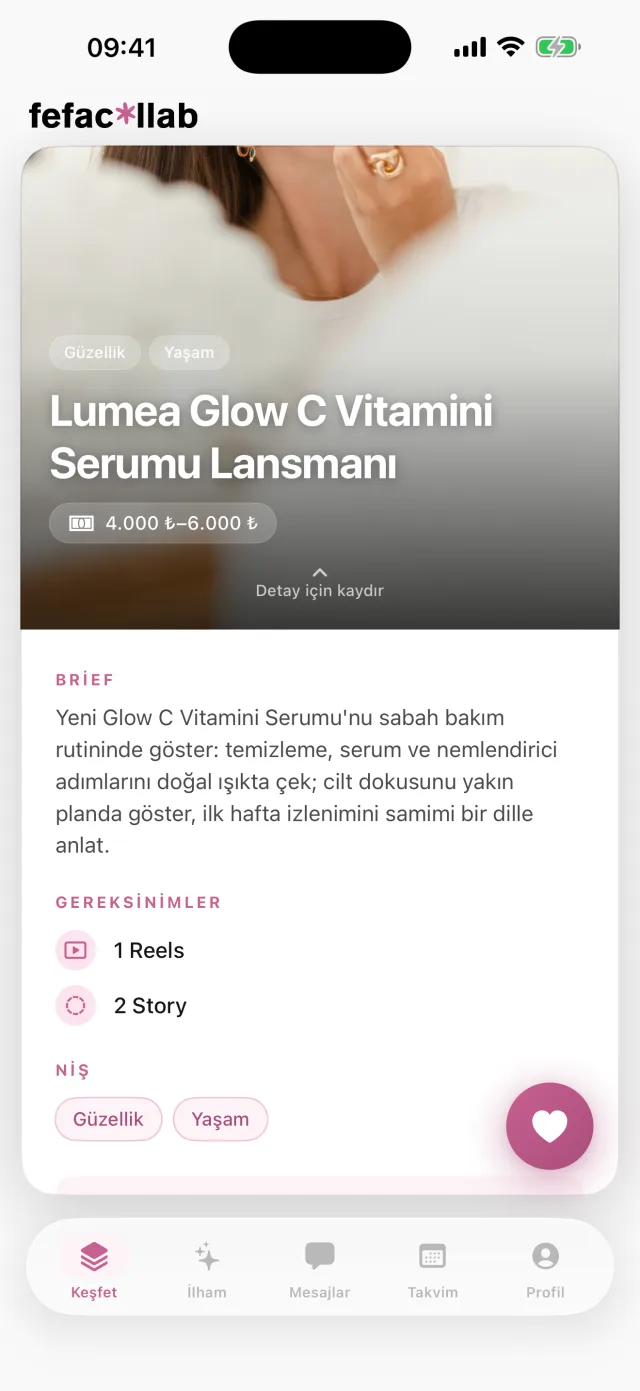
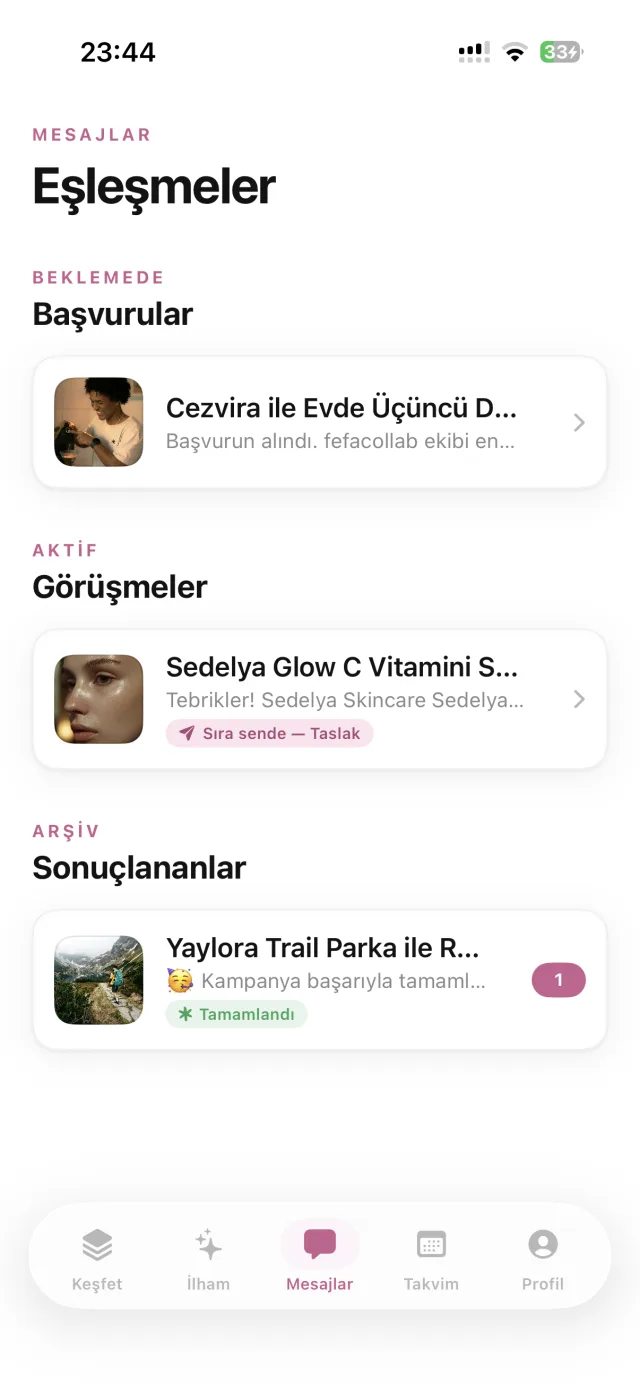
Creators swipe through campaign cards, apply and read their brief. They deliver a draft, publish, and follow their earnings in the same app.
A web portal for brands
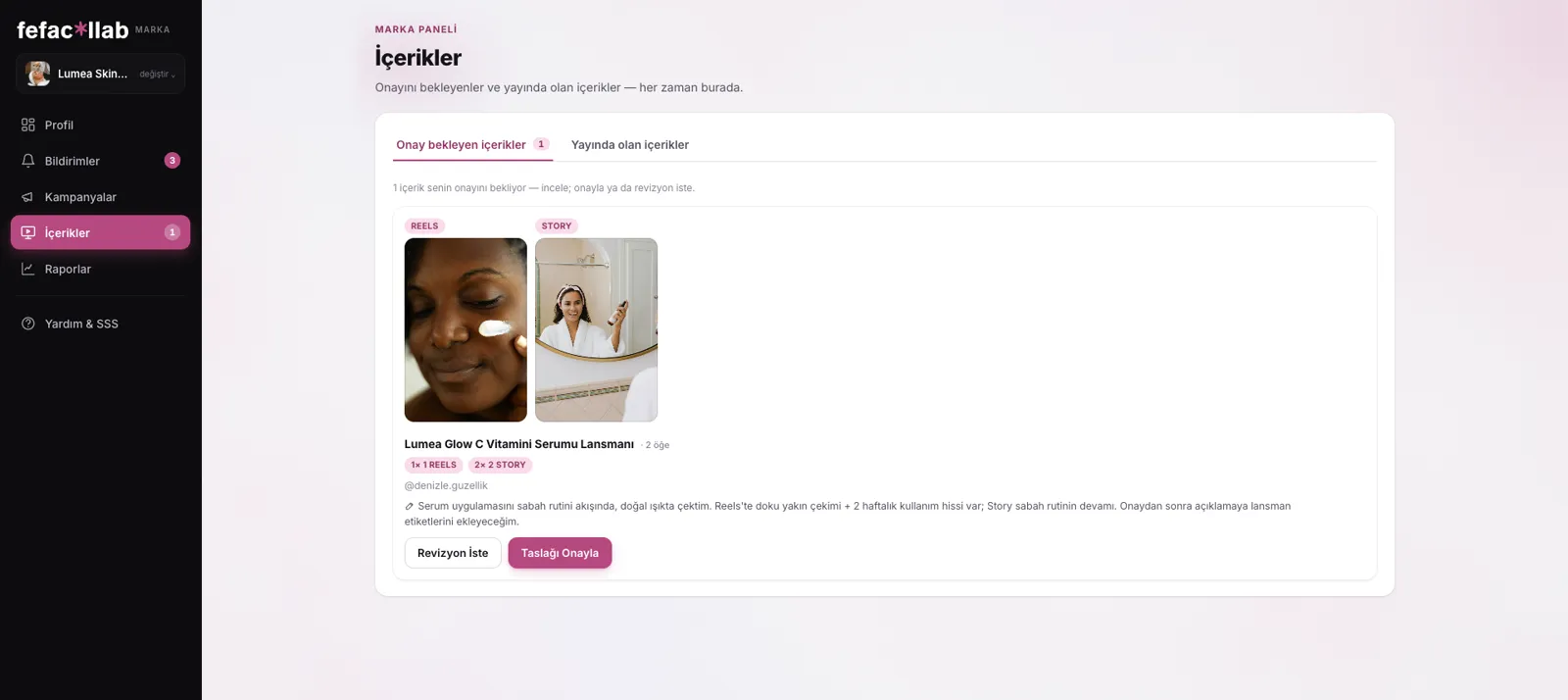
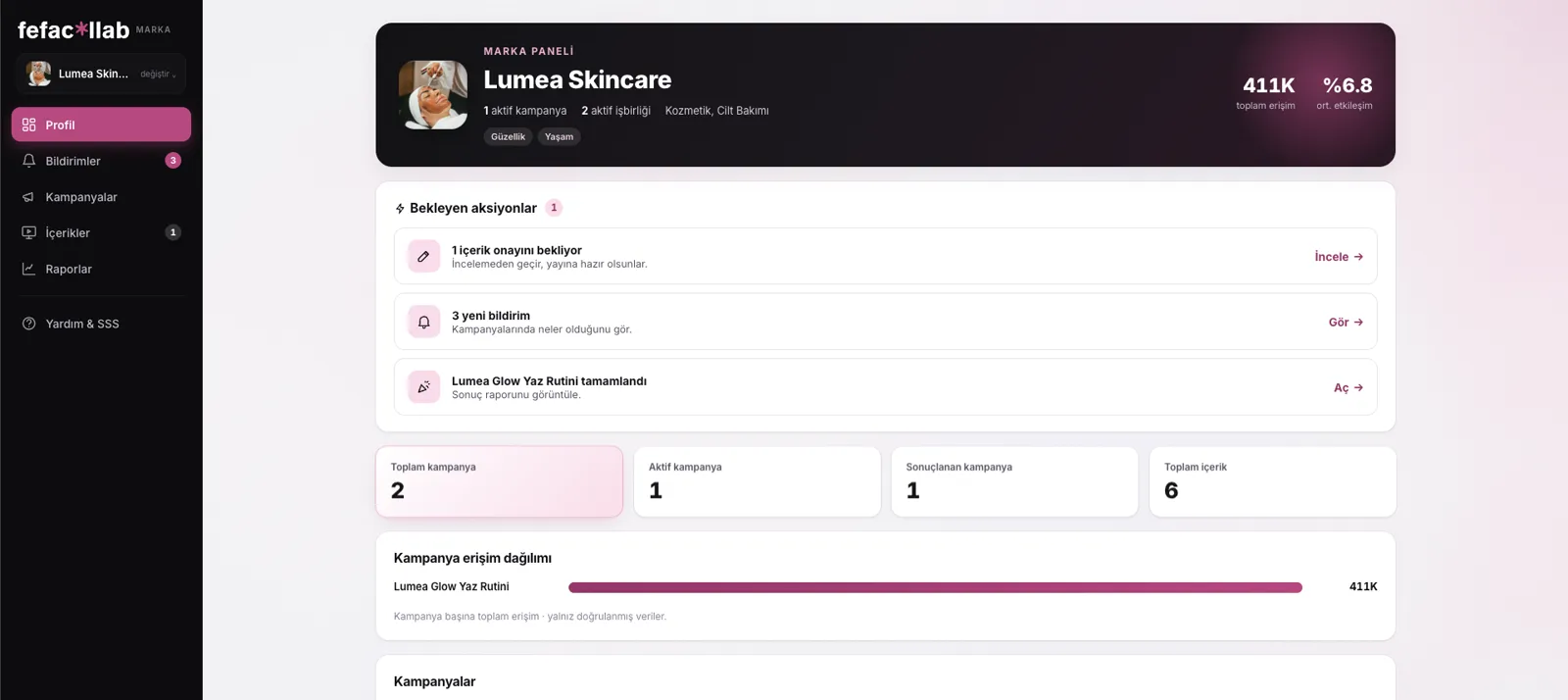
Brands follow their campaign and approve content item by item, or ask for a revision. When the campaign ends they read the verified results report and download it as a PDF.
An admin panel for the Fefa team
Selecting applicants, checking content, messaging and tracking payments all run from here. The day starts with a single list that ranks everything waiting by priority.
One status model, three voices
There are fourteen statuses from application to payment. The same status is worded for whoever is reading: creators see that it is their turn, brands see that their approval is awaited.
Designed with room for mistakes
Applying, approving and bulk selection each come with an undo window. Payments and status changes pass through checks on the server.
One design language on three surfaces
The same colour, the same star, the same motion. The app speaks Turkish and English and works in light and dark themes.
Fefacollab
The product’s own screen. The campaign shown is a sample.
- brand.fefacollab.com
- brand.fefacollab.com
- brand.fefacollab.com

In use
Creators download the app from the App Store. Once their application is selected they reach the brief, send a draft, and publish when approval arrives.
Brands enter the portal by invitation and step in only where a decision is theirs to make. The Fefa team handles everything in between from the admin panel.
Three surfaces, one process
Creators
Creator app
Discover, apply, deliver the draft, publish, follow earnings.
Brand representatives
Brand portal
Follow the campaign, approve content or ask for a revision, read the report.
The Fefa team
Admin panel
Select applicants, check content, message, track payments.
The path of a campaign
Apply
Selection
Draft
Approval
Publish
Performance
Payment
Report
In numbers
3 surfaces: app, portal, panel
14 statuses in one shared process model
74 server functions
2 languages: Turkish and English
Figures are taken from the product’s source code.
Next project
Brand Fefasocial
A sales team’s whole day in one panel.
Sales and operations panel
Read the case study